The ECB meeting on October 29 ended as expected: the deposit rate remained at 2.50%, and the central bank's rhetoric softened noticeably from September, as the ECB emphasized the absence
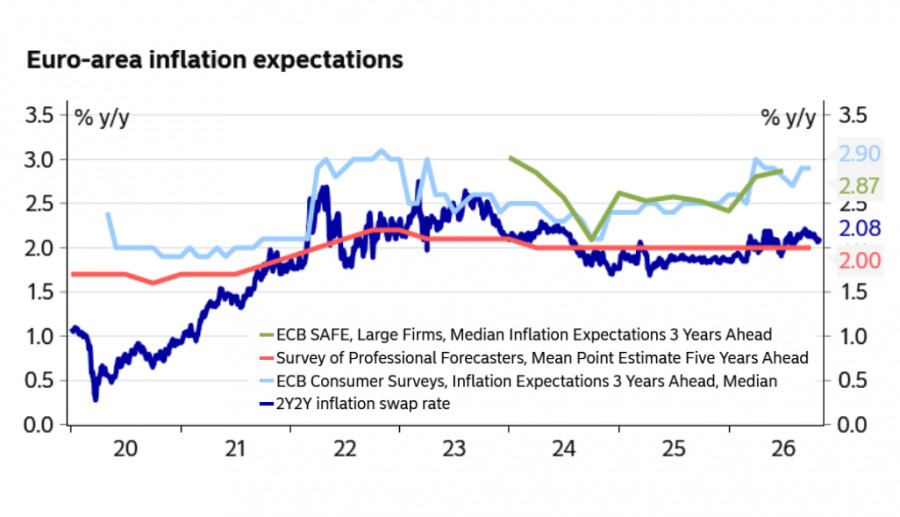
The European Central Bank meeting on October 29 ended as expected: the deposit rate remained at 2.50%, and the central bank's rhetoric softened noticeably from September, as the ECB emphasized the absence of second-round effects from the energy shock and the stability of core inflation. The euro fell, then fully recovered its losses when Lagarde said during the press conference that the Governing Council had discussed a rate hike.
Lagarde said that the Governing Council discussed a rate increase but decided to wait for additional data due by December. If incoming data confirm the current picture and no major new shocks occur, "the direction of travel is fairly clear." The market interpreted this as a clear signal that a December hike is now the base case, and it now expects at least two 25bp moves. She also confirmed that she will leave the ECB on February 7, 2027, finishing her term early, and that this news is unlikely to affect the euro. Since the Federal Reserve also left rates unchanged at its October 28 meeting and the market likewise expects at least two hikes, the differential does not narrow, and neither the euro nor the dollar gains an additional edge.
Meanwhile, the gas situation has become critical. Prices have risen roughly threefold compared with pre–Middle East conflict levels, and inventories are at a record low. According to Gas Infrastructure Europe, EU storage fill stood at 74.68% at the end of October — the lowest level for that day since 2011. In Germany, the largest gas consumer in Europe, fill is around 61%, which is well below last year's levels and below its own 70% norm. High gas prices weigh on real household incomes, raise production costs and undermine the competitiveness of European industry. The Bundesbank notes that Germany's economy likely stagnated in the third quarter, partly due to high energy prices and a loss of competitiveness amid the Iran conflict.
The net short position on the euro increased during the reporting week by $1.5 billion to -$20.58 billion; speculative positioning for the euro is firmly bearish, but short-term factors suggest a possible corrective rally.
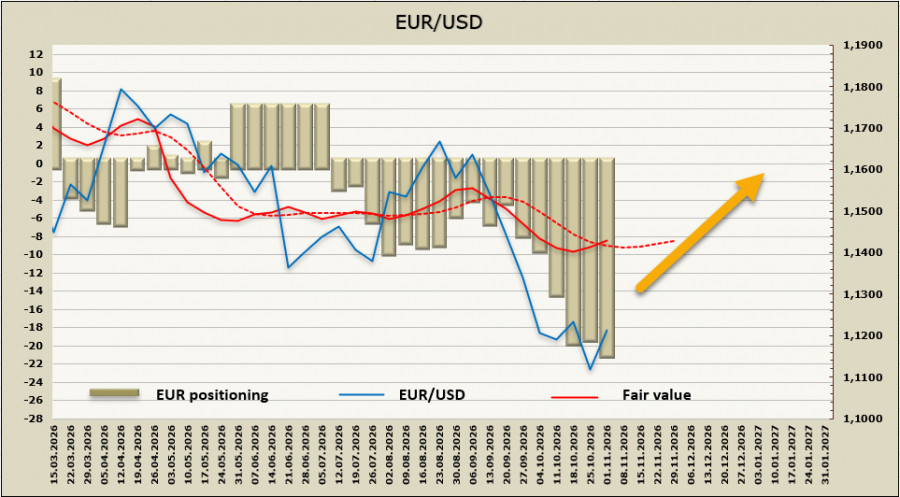
A week earlier, we saw prospects for EUR/USD to fall to support at 1.1066, and the euro began to move down, but the outcomes of the Fed and ECB meetings allowed the decline to stabilize. We see potential for the correction to continue: if the euro overcomes resistance at 1.1250/70, an impulse to 1.1320/40 is possible. At the same time, the euro's long-term weakness has not disappeared, and after consolidation, we expect the decline to resume first to 1.1066 and then to the longer-term target of 1.0905.









 আমাদের সাথে যোগাযোগ করুন