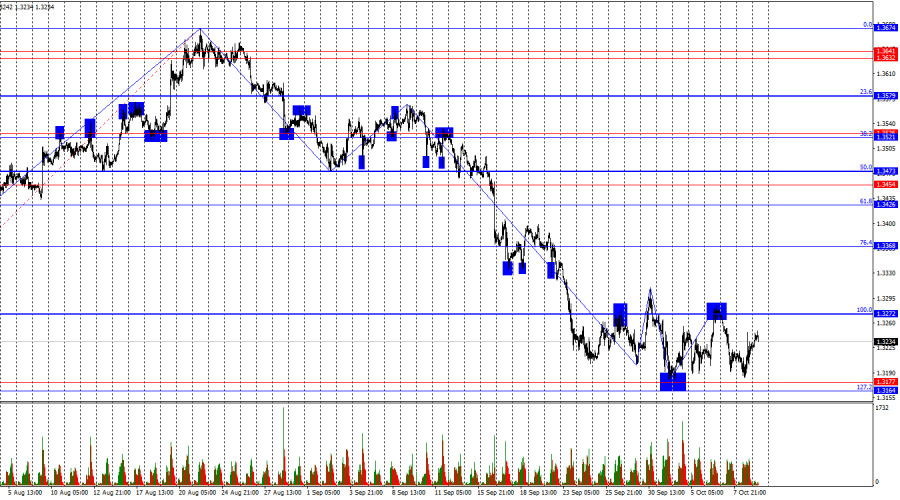
On the hourly chart, GBP/USD reversed in favor of the pound again on Thursday and rose somewhat toward the 100.0% Fibonacci retracement level at 1.3272. However, overall, the pound has been trading in a range between 1.3177 and 1.3272 for two weeks. A rebound from 1.3272 would favor the US dollar and a resumption of the decline toward the 1.3164–1.3177 support level.
The market situation remains firmly bearish. The last completed upward wave broke above the previous peak, while the last downward wave failed to break below the previous trough. Thus, bears continue to control the market. The FOMC's monetary policy tightening and the hawkish outlook conveyed by Kevin Warsh continue to support the dollar. A break in the current trend is now possible only above 1.3284 or after two bullish waves have formed.
The news flow on Thursday had no impact on market sentiment, and the pound managed to recover slightly only because it was trading within a range. The market's hawkish expectations regarding FOMC monetary policy increased in September, and expectations regarding the Bank of England's monetary policy may rise in October. Recent statements by Monetary Policy Committee (MPC) policymakers indicated growing expectations of accelerating inflation in the UK. By the end of the year, the Consumer Price Index could rise to 4%, which would be entirely unacceptable. Consequently, the Bank of England may raise interest rates at its next meeting, potentially providing long-awaited support for the pound and the bulls. However, it should be noted that the bulls themselves are responsible for their current predicament. Several favorable opportunities have emerged in recent weeks. For example, the UK reported strong GDP data, while the US labor market and unemployment reports were weak. The bulls had opportunities to launch an advance but failed to capitalize on them. The pound may fail to rise even if the Bank of England tightens monetary policy, while the bulls continue to remain inactive.
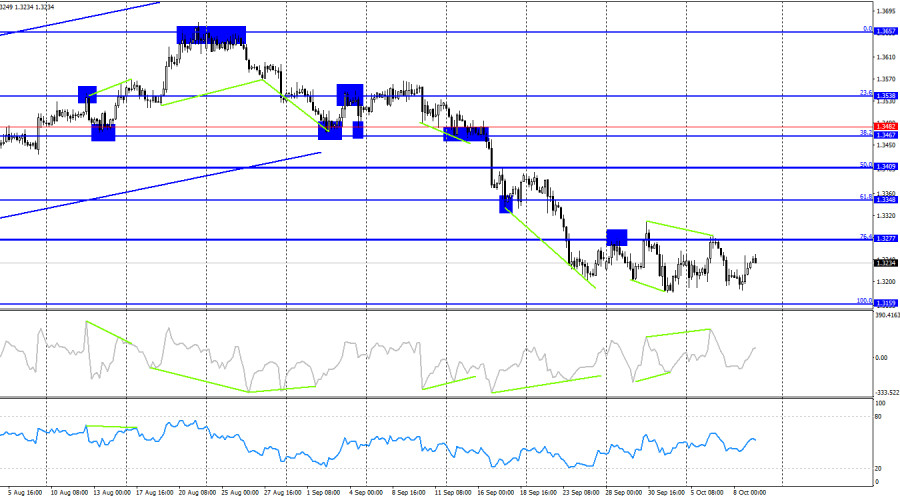
On the 4-hour chart, GBP/USD reversed in favor of the US dollar after rebounding from the 76.4% Fibonacci level at 1.3277 and forming a bearish divergence on the CCI indicator. The decline may continue toward the 100.0% retracement level at 1.3159. A rebound from this level could pave the way for another advance by the pound. The technical picture on the hourly chart is currently more convincing, so the hourly chart is the one to focus on.
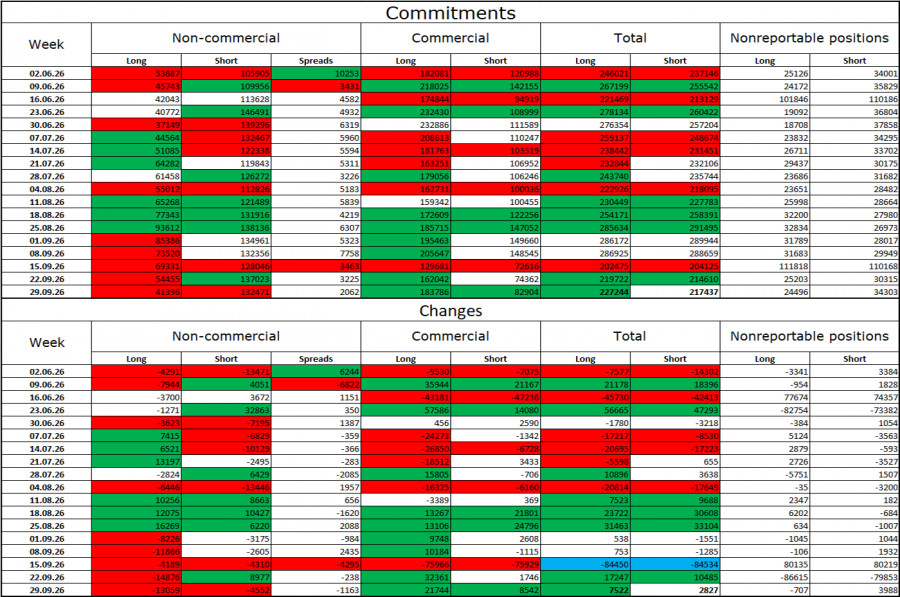
Sentiment among Non-commercial traders became even more bearish over the latest reporting week. The number of Long positions held by speculators fell by 13,059 for the fifth consecutive week, while the number of Short positions declined by just 4,552. The gap between Long and Short positions currently stands at approximately 41,000 versus 132,000, respectively. The bears' advantage is growing again. Previously, bearish dominance was unquestionable, but the situation is now less clear-cut because the news background has changed in recent months.
The bearish trend in the pound remains unconvincing, but developments in the near future will depend on Trump's trade policy, the monetary policies of the Federal Reserve and the Bank of England, and the duration, scale, and consequences of the war in the Middle East. In recent months, the market had shifted its focus toward peace, but negotiations between Iran and the United States failed before they had properly begun. There is also no guarantee that the talks will resume anytime soon.
On October 9, the economic calendar contains only one low-importance release. The impact of economic data on market sentiment on Friday is expected to be limited or nonexistent.
Selling the pair is possible today if it rebounds from 1.3272 on the hourly chart, with a target of the 1.3164–1.3177 support level. Buying is possible today if the pair rebounds from the 1.3164–1.3177 zone, with a target of 1.3272.
The Fibonacci retracement levels are drawn from 1.3272 to 1.3674 on the hourly chart and from 1.3158 to 1.3655 on the 4-hour chart.



















 আমাদের সাথে যোগাযোগ করুন